Should I Sell My Mineral Rights or Keep Them? A Practical Guide for Mineral Owners
Selling mineral rights can make sense when the value you can receive today outweighs the risk-adjusted value of holding them for future royalties. Keeping them may make more sense when you have strong existing production, meaningful development potential, and no immediate need for liquidity.
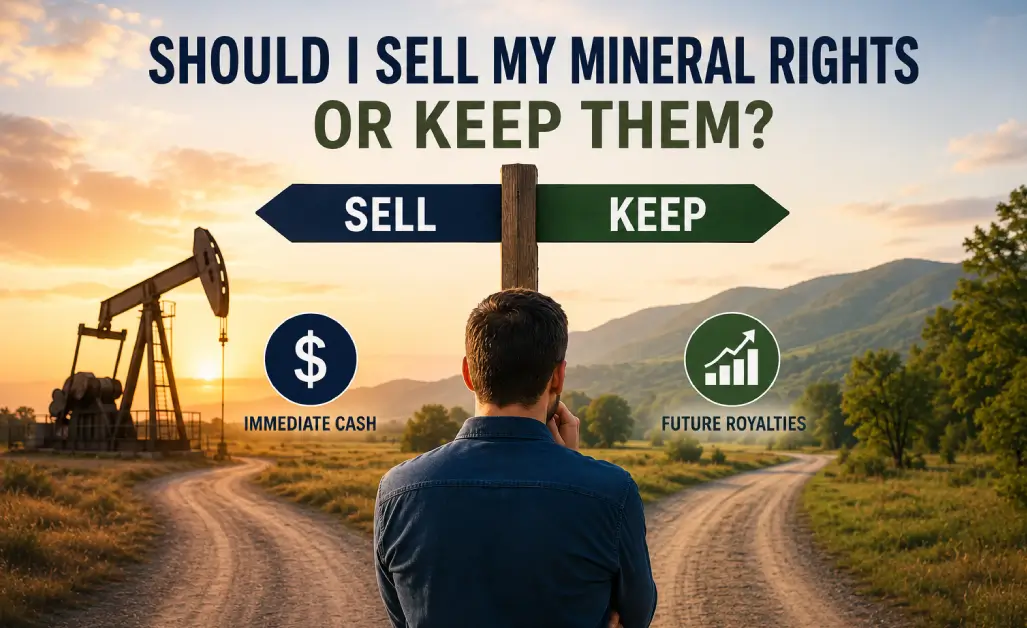
Before deciding whether to sell or keep your mineral rights, it helps to understand what you own, what drives its value, and what you would be giving up in exchange for a lump-sum payment.
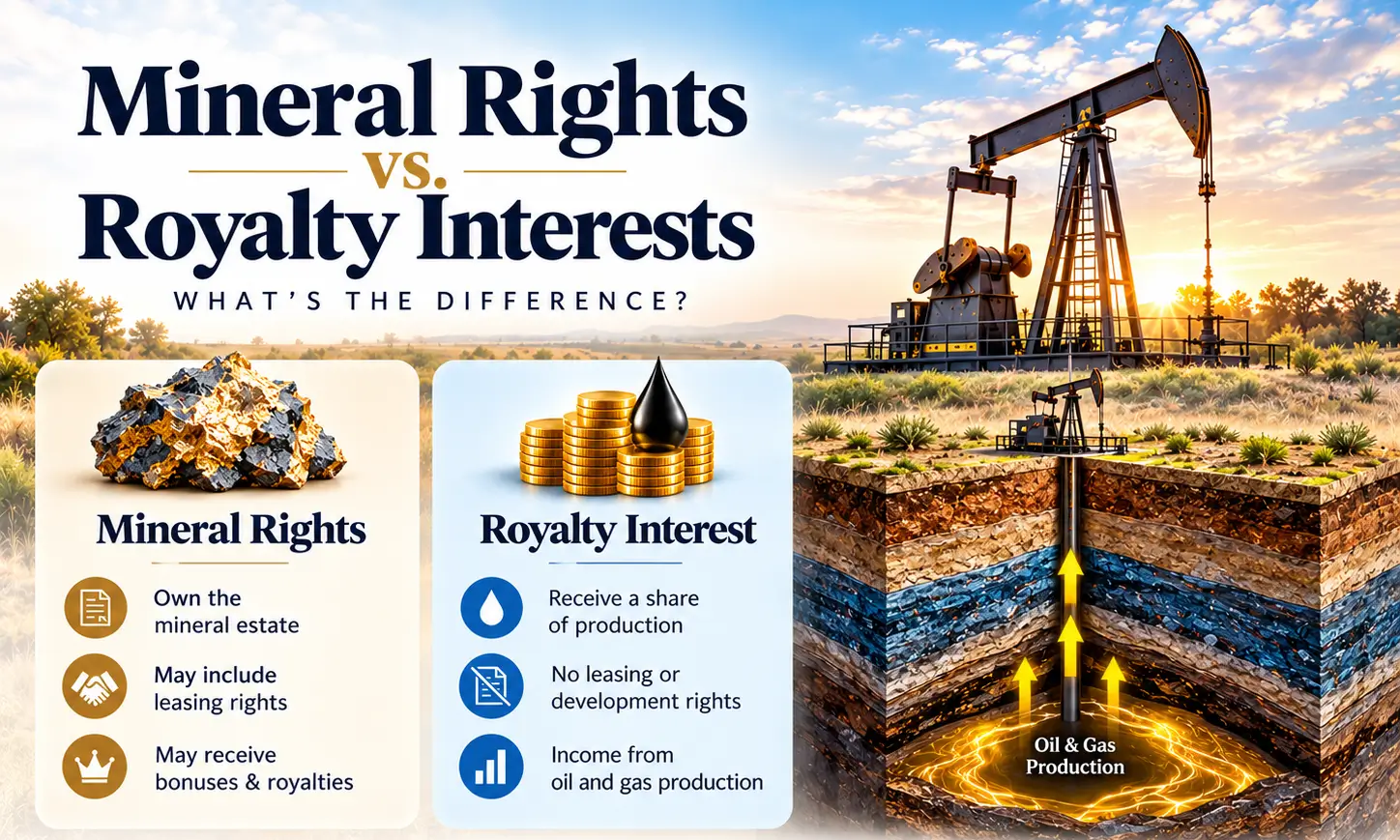
What Does It Mean to Own Mineral Rights?
Why Would Someone Sell Mineral Rights?
- Wanting immediate access to cash
- Paying off debt or funding a major purchase
- Retirement or estate planning
- Simplifying inherited or divided ownership
- Diversifying concentrated oil and gas exposure
- Avoiding uncertainty about production and commodity prices
- Taking advantage of an attractive offer
- No longer wanting to manage a mineral interest
Why Would Someone Keep Their Mineral Rights?
- Value continuing monthly or quarterly royalty income
- Believe future development may not be fully reflected in the offer
- Do not need immediate liquidity
- Are comfortable with commodity-price and drilling risk
- Want to retain long-term exposure to oil and gas activity
Selling May Make Sense vs. Keeping May Make Sense
| Selling may deserve a closer look when... | Keeping may deserve a closer look when... |
|---|---|
| You want liquidity now | You value recurring royalty income |
| Much of the current value comes from existing wells that are declining | Significant undeveloped potential may exist |
| You want to diversify concentrated oil and gas exposure | You are comfortable with commodity-price and drilling risk |
| Inherited or divided ownership is becoming difficult to manage | You have a long-term investment horizon |
| The offer represents an attractive value relative to expected future cash flow | You believe future development is not adequately reflected in the offer |
How Many Years of Royalties Is the Offer Worth?
- Oil and gas wells generally produce less over time
- Commodity prices change
- New wells may or may not be drilled
- Existing wells can be shut in or experience downtime
- Money received in the future is worth less than money received today
- Taxes may differ between receiving royalties and selling the asset
How Do You Decide Whether an Offer Is Worth Considering?
Do I Have to Sell All of My Mineral Rights?
What About Taxes When Selling Mineral Rights?
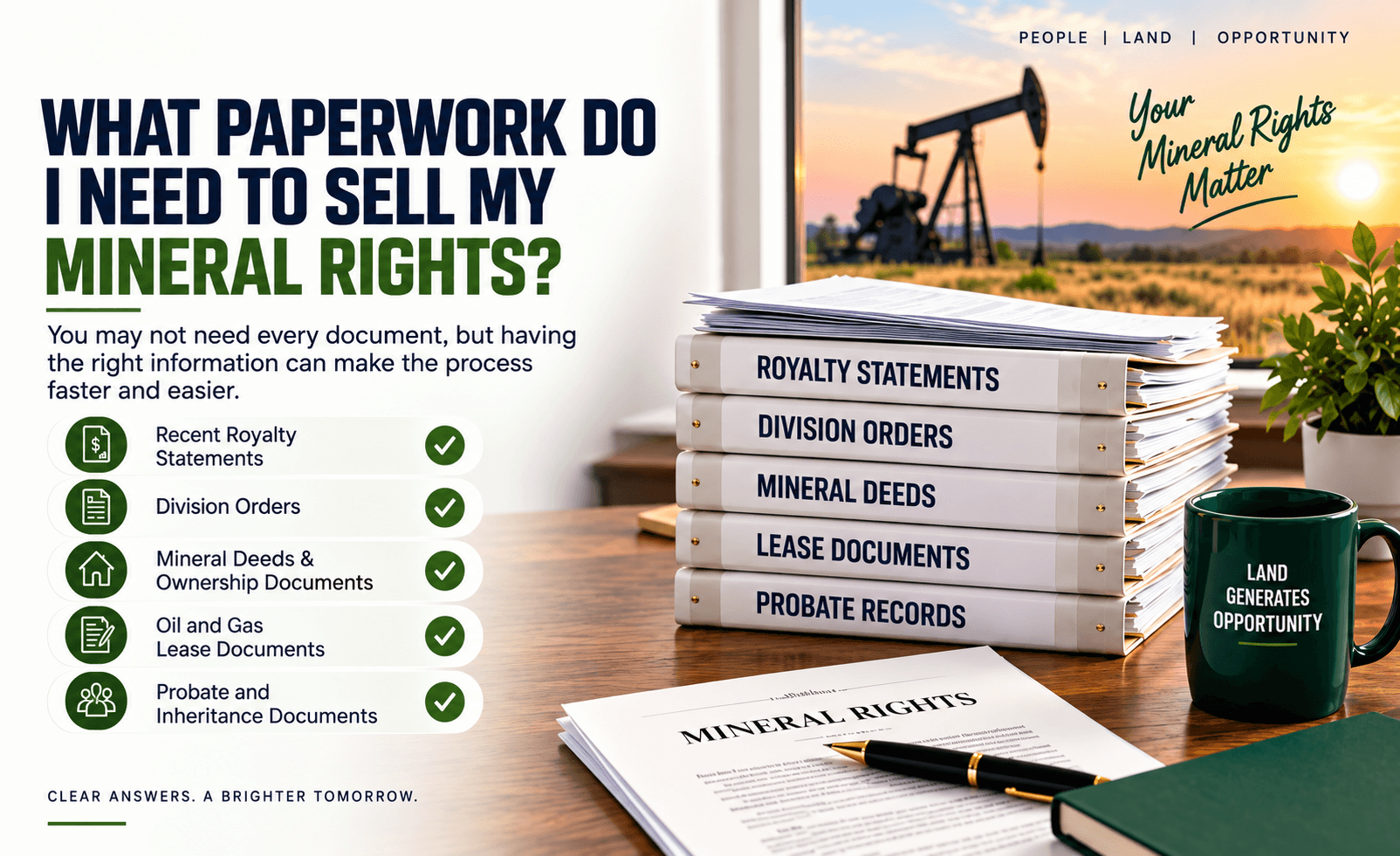
What Information Should You Gather Before Selling?
- Recent royalty or revenue statements
- Division orders
- Lease information
- Recorded deeds or mineral conveyances
- Probate or inheritance documents
- Information about producing wells
- County and legal property descriptions
- Previous purchase or ownership documentation
Should You Accept the First Offer You Receive?
What Questions Should You Ask a Mineral Rights Buyer?
How did you determine the value of my mineral interest?
The buyer should be able to explain the principal factors behind the offer in understandable terms.
What exactly am I selling?
Confirm which tracts, interests, depths, formations, and percentage of ownership are included.
Can I sell only part of my interest?
If you prefer a partial sale, ask whether the offer can be structured so you retain a clearly defined portion.
Can the offer change after I accept it?
Ask what title, ownership, production, or other findings could cause an adjustment and how that process works.
Are there any fees or costs?
Ask about transaction expenses and whether you will be responsible for any closing costs.
How long will the process take?
The timeline can vary depending on title research, documentation, and due diligence.
Can I take time to review the documents?
You should be able to understand the transaction and seek legal, tax, or financial advice before signing.
How Liberty Mineral Partners Evaluates Mineral Rights
Frequently Asked Questions
Is it better to sell mineral rights or keep collecting royalties?
It depends on the value available today, expected future production, development potential, risk, taxes, and your financial goals. Neither choice is automatically better for every owner.
How do I know what my mineral rights are worth?
A valuation may consider current production, decline, location, ownership details, lease terms, operator activity, nearby drilling, market conditions, and future development potential.
How many years of royalties is a fair price for mineral rights?
There is no universal multiple. Comparing an offer with current annual royalties is useful, but the calculation should also account for production decline, commodity-price risk, possible new wells, timing, and taxes.
Can I sell only part of my mineral rights?
Often, yes. A transaction may be structured as a partial sale, but the deed should clearly state the interest being conveyed and retained.
Do I have to sell if I request an offer?
No. Requesting a no-obligation evaluation allows you to learn what Liberty Mineral Partners may offer without requiring you to complete a sale.
Are mineral rights worth more when oil prices are high?
Commodity prices can affect value, but buyers also consider expectations about future prices, production, drilling activity, costs, and the characteristics of the specific interest.
How are producing mineral rights valued?
Producing interests are commonly evaluated using revenue history, well performance, projected decline, ownership decimals, commodity-price assumptions, operating status, and potential additional development.