Liberty Mineral Partners

Why Title Research Matters in Mineral Rights Transactions | LibertyMP

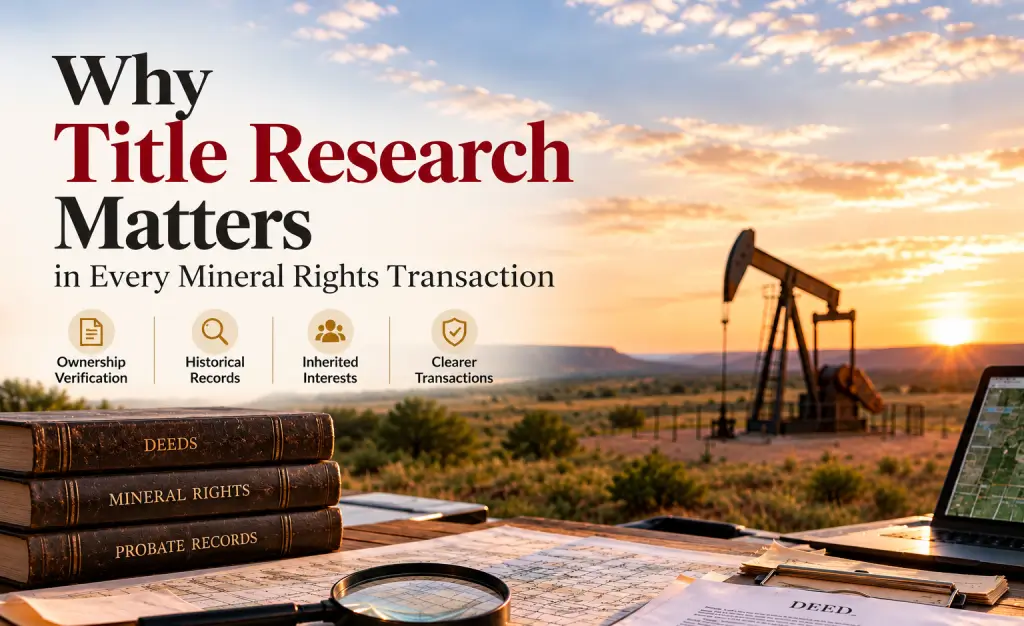
Why Title Research Matters in Every Mineral Rights Transaction

Learn why title research matters in mineral rights transactions, how ownership records are reviewed, and what can make verification more complex.
What Documents Do I Need to Sell

Introduction

A mineral rights transaction can involve much more than agreeing on a price. Before a transaction can move forward, the parties may need to understand who owns the interest, how that ownership was established, and whether the available records support the information being reviewed.
That is where title research becomes important. By examining relevant public records and ownership documents, the people working on a transaction can identify information that may need clarification before closing.
For mineral owners, understanding the purpose of title research can make the process easier to follow—and help explain why some transactions require more documentation or time than others.

What Is Title Research?

Title research is the process of reviewing relevant records and documents to understand the history and evidence of ownership associated with a property or mineral interest. Depending on the situation, research may include deeds, mineral reservations, conveyances, leases, probate records, affidavits of heirship, and other documents.
The records available and the work required can vary by county, property, and ownership history. Title research is not simply a search for one document; it may require reviewing several records together to understand how an interest passed from one owner to another.
1. It Helps Establish Who Owns the Interest
Mineral interests can change hands through sales, gifts, inheritance, and other transfers. Historical deeds may also reserve or convey mineral rights separately from the surface property.
Reviewing relevant records helps the parties understand the ownership history and identify the people or entities whose interests may be involved. Conclusions depend on the documents available and the requirements of the transaction.
2. Historical Documents Can Tell Different Parts of the Story
A single deed may not provide the full picture. Earlier conveyances, reservations, leases, probate documents, and other records may contain important details about an interest.
For example, a document may transfer the surface estate while reserving some or all of the mineral estate. Another document may transfer only a fractional interest. Reviewing records in context helps avoid relying on one document without considering the broader ownership history.
3. Inherited Mineral Rights May Require Additional Review
Inherited interests can involve multiple generations and several heirs. Research may need to consider probate records, affidavits of heirship, deeds, or other documents that help explain how the interest passed between owners.
If records are incomplete or an ownership question remains unresolved, additional research or documentation may be needed. Requirements vary by facts and applicable law; owners should consult a qualified attorney for legal advice about inheritance or title questions.
4. Title Research Can Identify Questions Before Closing
The purpose of research is not to assume that every record will be straightforward. It is to identify information that needs attention while there is still an opportunity to ask questions and gather supporting documents.
Potential issues may include missing conveyances, inconsistent names, unclear legal descriptions, multiple ownership interests, historical reservations, or gaps in available records. Identifying a question does not automatically mean a transaction cannot proceed. It means the parties can determine what further review is appropriate.
5. Ownership Details Can Affect the Transaction
The interest being evaluated must be understood clearly. Ownership percentages, reservations, leases, and supporting documents can all be relevant, depending on the property and transaction.
If research changes the understanding of what is owned or included, the parties may need to review the information and determine appropriate next steps. Mineral owners should ask questions when something is unclear and review transaction documents carefully before signing.
6. Good Research Requires Attention to Detail
Title research often involves comparing records created at different times, using different names or descriptions, and filed in different places. Small details can matter, which is why the work may require patience and careful documentation.
7. Clear Communication Helps Keep the Process Understandable
When additional records are requested, mineral owners should be told what is needed and, where possible, why it matters. Clear communication helps owners understand what stage the transaction has reached and what actions may be required.
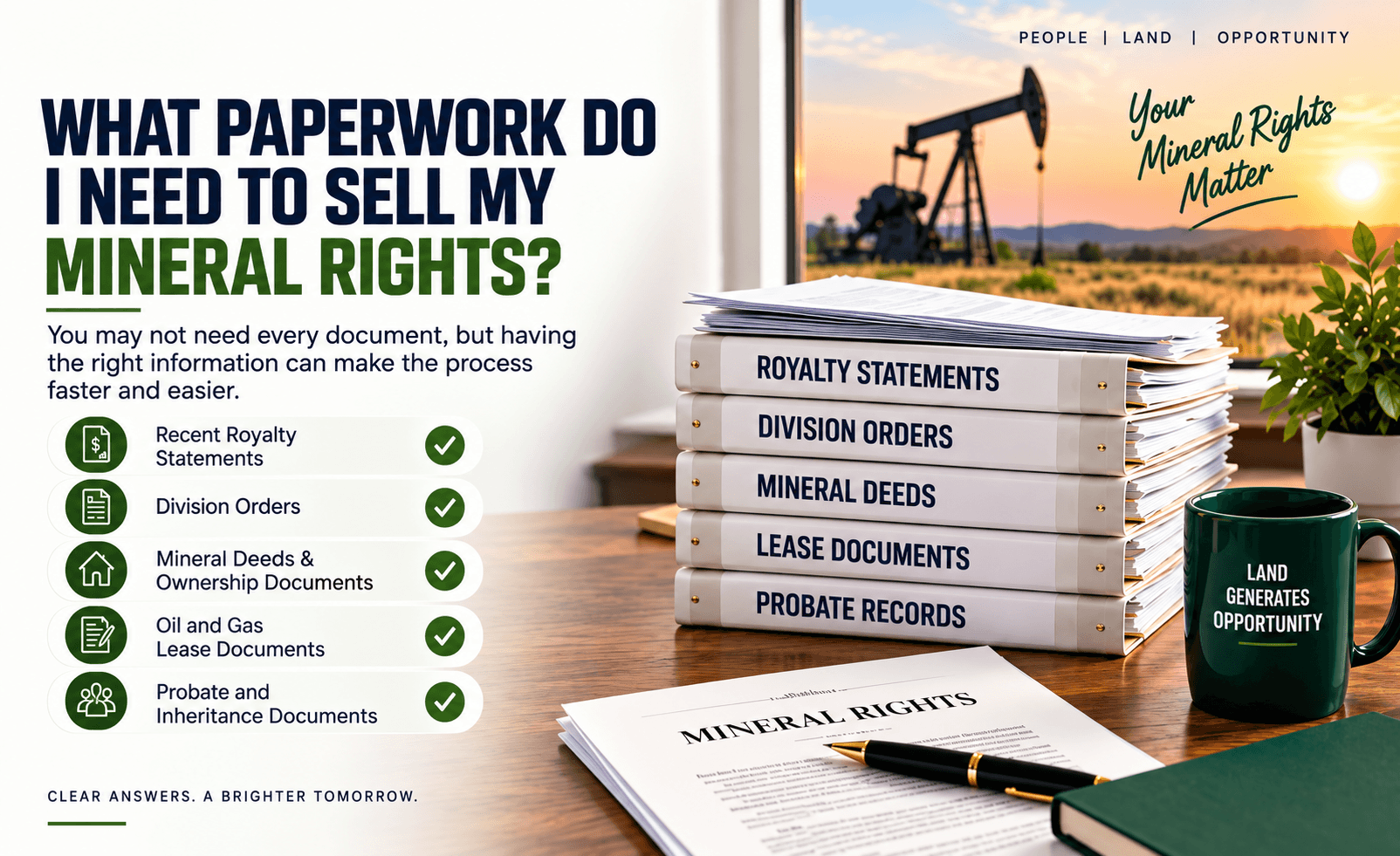
Owners can help by sharing accurate property information and copies of relevant documents they already have, such as royalty statements, deeds, division orders, or inheritance records. Not every document is required in every situation; ask the transaction contact what would be useful.

Why Title Research Matters to Mineral Owners

Title research helps the parties build a clearer understanding of the interest involved and the records that support it. It can also bring questions to light before a transaction is completed.
A careful process may take more time than a quick review of limited information, especially when ownership has changed over many years. The goal is to understand the available evidence, address relevant questions, and avoid treating assumptions as confirmed facts.

How This Fits Into Liberty Mineral Partners’ Process

Liberty Mineral Partners’ process page describes the company’s approach to researching and verifying mineral interests. Readers can learn more by visiting the company’s process page.
For additional context on the role of land work, read Liberty’s existing article, “How a Good Landman Can Put More Money in Your Pocket.” It discusses how careful landman work can make a difference during a mineral rights transaction.

Frequently Asked Questions

Is title research the same as looking up a property online?

Not necessarily. Online information may be a starting point, but research can require reviewing official records and related documents to understand the ownership history.

Why might title research take longer for inherited mineral rights?

Inherited interests may involve multiple generations, heirs, probate records, or gaps in the available documentation.

Does finding a title issue mean a sale cannot happen?

Not automatically. The next step depends on the issue, supporting records, and requirements of the transaction.

Can a landman provide legal advice about ownership?

A landman may research and organize records, but legal questions or legal opinions may require a qualified attorney.

What documents should I provide?

Useful documents vary by transaction. Ask what is needed; available deeds, royalty statements, division orders, and inheritance records may help.

Final Thoughts

Title research is an important part of understanding a mineral rights interest. By reviewing relevant records, tracing ownership history, and identifying questions that may need further attention, the parties can make more informed decisions about the transaction.
The records and level of review required vary from one situation to another. If you are considering a mineral rights transaction, provide accurate information, ask questions about requested documents, and review the terms carefully before signing.
Scroll to Top