Can I Sell Part of My Mineral Rights?
Partial mineral rights sale, selling a portion of mineral rights, selling some mineral acres, partial mineral ownership, and retaining mineral rights.

Introduction
If you own mineral rights, you may not have to choose between selling everything and keeping everything. In some situations, a mineral owner may be able to sell only a portion of an interest and retain the rest.
A partial mineral rights sale can be structured in different ways depending on the ownership the property involved, and the rights being conveyed. Before agreeing to a transaction, it is important to understand exactly what portion is being sold and what rights you will retain.
The Short Answer: Can I Sell Only Part of My Mineral Rights?
In some circumstances, yes. A mineral owner may be able to sell a percentage of an interest, a defined tract, or another specifically described portion of the mineral rights.
The exact structure depends on the ownership and the legal description of the interest. The transaction documents need to clearly identify what is being conveyed and what remains with the seller.
If you are considering a partial sale, reviewing your deed, prior conveyances, probate or estate documents, and other ownership records can help establish what you own before deciding what portion to sell.
What Is a Partial Mineral Rights Sale?
A partial mineral rights sale means transferring only part of a mineral interest while retaining another portion.
For example, an owner who holds 100% of a particular mineral interest may decide to sell 50% of that interest and retain the remaining 50%. The result is different from selling the entire mineral interest because the seller continues to own an interest after the transaction.
The details matter. A partial transaction should clearly describe the percentage, property, and rights included in the conveyance.
Common Ways a Partial Sale May Be Structured
Depending on the circumstances, a partial mineral rights transaction may involve:
- Selling a percentage of the mineral interest — An owner may sell a specified percentage while retaining the remainder.
- Selling an interest in a defined tract — The transaction may identify particular acreage or a specific legal description.
- Selling an interest limited by depth or formation — In some transactions, the conveyed interest may be described by particular depths or formations.
- Retaining specified rights — The transaction documents can define what the seller retains and what is transferred.
Because mineral ownership can be affected by previous deeds, reservations, leases, and other instruments, the exact structure should be confirmed through the applicable ownership and title records.
Why Would Someone Sell Only Part of Their Mineral Rights?
There are several reasons an owner may consider a partial sale instead of selling the entire interest.
Some owners may want to receive a portion of the value today while retaining exposure to future production. Others may want to reduce their mineral holdings while keeping an interest in a particular property or area.
A partial sale can also be considered when an owner wants to balance current financial needs with a desire to retain some future mineral-related income or potential value.
The right decision depends on the owner’s objectives, the characteristics of the interest, and the terms of the transaction.
How Does a Partial Sale Affect Future Royalty Income?
A partial sale can reduce the seller’s future share of income associated with the interest that is conveyed.
For example, if an owner sells 50% of a mineral interest and retains 50%, the seller generally no longer owns the portion that was transferred. Any future payments attributable to the transferred interest would be associated with the new owner, subject to the applicable lease and ownership structure.
This is one reason it is important to understand the exact interest being sold before signing a conveyance.
How Does a Partial Sale Affect Value?
The value of a partial interest may not simply be calculated by taking the value of the entire interest and multiplying it by the percentage being sold.
Factors can include the specific property or acreage involved, current production, operator activity, commodity prices, ownership details, lease terms, development stage, and the characteristics of the interest being conveyed.
For owners evaluating a partial sale, understanding the interest itself is an important first step before comparing offers.
What Documents Should You Review?
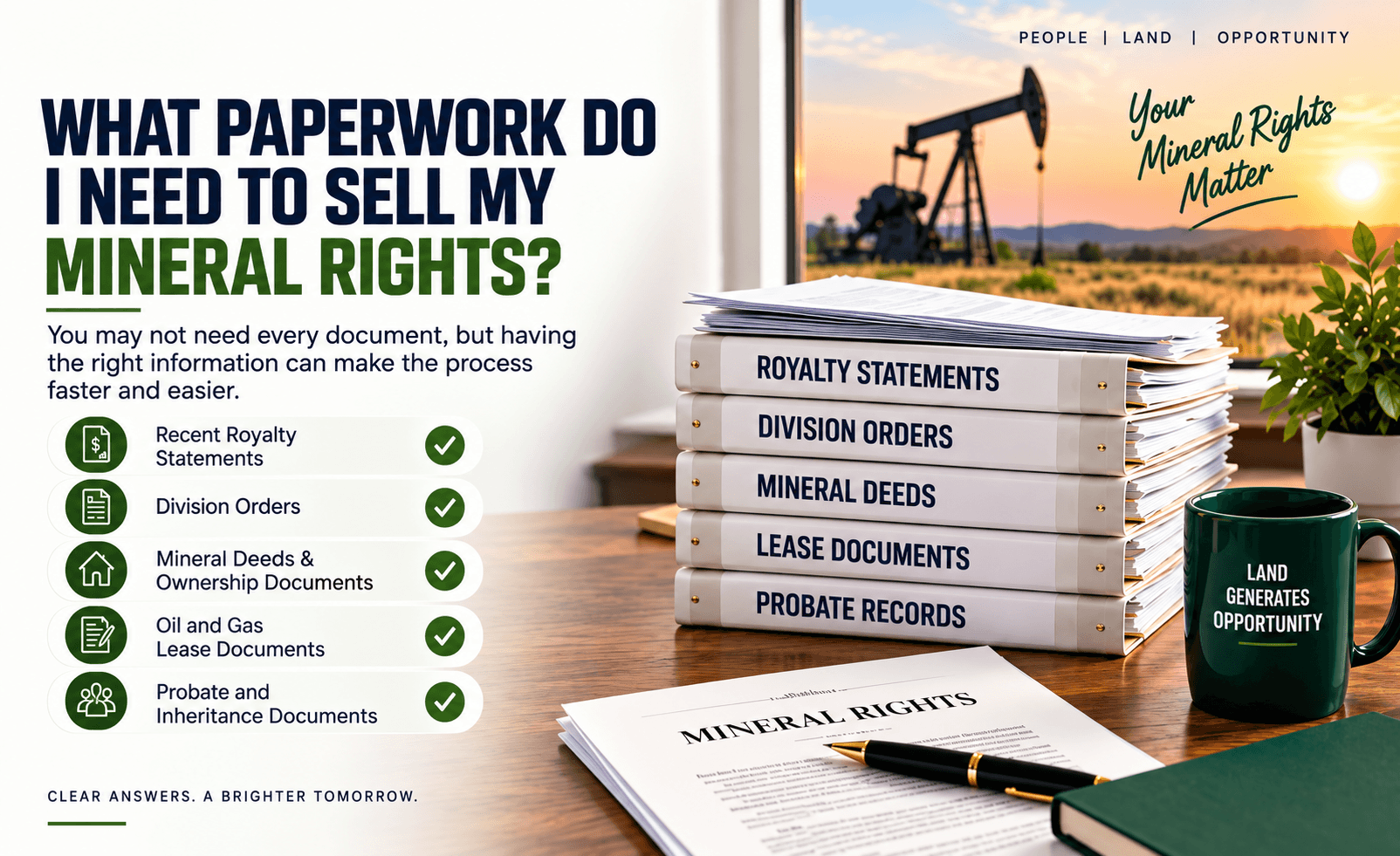
Before considering a partial mineral rights sale, it can be helpful to gather documents that establish ownership and describe the interest.
These may include:
- Mineral deeds and prior conveyances
- Property deeds
- Probate or estate documents, when applicable
- Division orders and royalty statements
- Lease documents, when available
- Production or well information
- Other records that identify the mineral interest
Not every owner will have every document. Public records and other available information may also help establish ownership and the characteristics of the interest.
What to Check Before Signing
Before signing a partial mineral rights transaction, make sure you understand:
- The exact percentage or portion being sold
- The property or legal description covered by the transaction
- Any depth or formation limitations
- The rights being conveyed
- The rights you will retain
- How the transaction affects future income associated with the interest
- The documents required to establish ownership
A partial conveyance should be reviewed carefully so the transaction reflects the interest you intend to sell and the interest you intend to retain.
How Liberty Mineral Partners Reviews an Interest
Liberty Mineral Partners begins by reviewing available information about the mineral interest, including public information, production data, and ownership-related records. This preliminary research helps the company understand the interest and prepare an offer.
If an offer is accepted, the parties enter into a Purchase and Sale Agreement (PSA). After the PSA is signed, the complete title examination begins. The full title review is used to verify ownership and identify the specific interest being conveyed.
The goal is to provide a straightforward process while giving the parties a clear understanding of the interest being transferred.
Frequently Asked Questions
Can I sell only 25% of my mineral rights?
In some situations, a mineral owner may be able to sell a specified percentage and retain the remainder. The exact structure depends on the ownership and the transaction documents.
Can I sell mineral rights from only one property?
Potentially. A transaction can be structured around a particular property or legal description when the ownership records support that structure.
Can I sell some mineral rights and keep the rest?
Yes, a partial transaction may allow an owner to retain an interest while conveying another portion, subject to the applicable ownership and title records.
Does a partial sale affect future royalties?
It can. The portion conveyed to a buyer is no longer owned by the seller, so future payments attributable to that interest may be affected.
Should I review my deed before selling?
Yes. Ownership documents can help identify the interest you own and the portion you may be able to convey.
Final Thoughts
Selling part of your mineral rights can provide an alternative to either selling everything or keeping everything. However, the details of the interest being conveyed matter.
Before making a decision, review your ownership documents, understand the portion being sold, and consider how the transaction may affect future income and retained rights.
If you are considering a partial mineral rights sale, Liberty Mineral Partners can review the available information, provide an offer when appropriate, and complete the title examination after the Purchase and Sale Agreement is signed.